Rtveli is Georgia’s traditional autumn grape harvest, a sacred celebration of viticulture, family, and community. Marking the start of the qvevri winemaking season, this historic festival defines the agricultural year and shapes the exceptional natural Georgian wine poured daily at Saperavi NYC.
What Is Rtveli and Why Is It Culturally Significant?
Rtveli is an ancient Georgian grape harvest festival that blends agricultural labor with deep-seated cultural traditions, feasts, and polyphonic singing to celebrate the year’s wine bounty.
To understand Rtveli is to understand Georgia’s soul. With over 8,000 years of uninterrupted winemaking history, Georgia is widely recognized as the birthplace of viticulture. In this corner of the Caucasus, wine is not merely an agricultural product or a culinary accompaniment; it is a spiritual anchor, a symbol of national identity, and the thread that binds generations together. Rtveli is the annual culmination of this relationship. It is a multi-day harvest festival that occurs every autumn, transforming the countryside into a vibrant hub of collective labor, music, and gastronomy.
The cultural significance of Rtveli extends far beyond picking grapes. It represents a communal homecoming. During the harvest season, cities across Georgia empty as families travel back to their ancestral villages. Grandchildren, parents, and extended relatives gather in family vineyards to assist the elders with the demanding physical work of the harvest. This intergenerational bonding is central to the festival’s survival.
Historically, Rtveli dates back to pagan times, when ancient Georgians celebrated autumn harvest deities and offered the first pressings of grape juice to the gods of fertility. With the adoption of Christianity in the fourth century, these celebrations merged with Christian feasts, particularly those honoring Saint George. Today, the festival remains a profound expression of gratitude to the earth. The atmosphere in the vineyards is celebratory rather than transactional; the air is filled with laughter, the clinking of glasses, and the resonant harmonies of Georgian polyphonic singing, which UNESCO has recognized as intangible cultural heritage of humanity.
When Does the Georgian Wine Harvest Season Take Place?
The Georgian wine harvest season typically begins in late August in the warmer eastern regions and extends through November in the cooler, high-altitude western vineyards.
Because of Georgia’s diverse topography and microclimates, Rtveli has no single date. Instead, the harvest is a rolling celebration that moves across the country’s distinct winemaking zones. The climate varies dramatically from the dry, continental plains of the east to the humid, subtropical hillsides near the Black Sea coast, dictating when the grapes reach their optimal phenolic ripeness.
The harvest almost always begins in Kakheti, the crown jewel of Georgian winemaking, located in the eastern part of the country. Kakheti accounts for approximately 70% of Georgia’s total vineyard acreage. In the fertile Alazani and Iori river valleys, the hot, dry summer sun ripens the grapes quickly. Here, Rtveli usually kicks off in early September and runs through the end of the month. Winemakers monitor the sugar levels (measured in Brix) and acidity of the grapes daily, waiting for the perfect moment when the fruit achieves balance.
As the Kakhetian harvest winds down, Rtveli begins in Kartli, a region in central Georgia known for its crisp white wines and exceptional sparkling varieties. By mid-to-late October, the harvest moves into western Imereti, Guria, Samegrelo, and Adjara. In these western territories, higher humidity and cooler autumn temperatures slow ripening, pushing the harvest later into the year.
The final stage of the national harvest takes place in the mountainous northern region of Racha-Lechkhumi. In this high-altitude, dramatic landscape, rare indigenous grapes like Aleksandrouli and Mujuretuli are harvested in late October or even early November. The cool mountain nights preserve the grapes’ natural acidity while allowing sugars to concentrate, creating the perfect raw materials for naturally semi-sweet and complex dry red wines.
How Does the Qvevri Winemaking Season Begin During Rtveli?
The qvevri winemaking season begins during Rtveli with the meticulous cleaning of underground clay vessels followed by the traditional foot-crushing of grapes in wooden troughs.
The physical harvest is only the first half of the Rtveli story; the second half takes place inside the marani (the traditional Georgian wine cellar). In Georgia, the most prestigious and ancient wines are made using the qvevri method, a practice unchanged for millennia. A qvevri is a large, egg-shaped clay vessel that is buried entirely underground, with only its rim exposed at floor level. This subterranean environment provides natural, constant temperature control essential for fermenting and aging wine without modern refrigeration.
Before a single grape can be crushed, the marani must be prepared, a process that begins weeks before the harvest. Cleaning the buried qvevri is a highly specialized, labor-intensive task. A cellar master or a designated cleaner must physically climb inside the larger vessels to scrub the clay walls. They use a shali—a specialized brush made from cherry bark or wild grasses—along with water and natural antiseptic solutions like St. John’s Wort. Once scrubbed clean, they treat the inner walls with a thin layer of pure beeswax, which seals the clay’s microscopic pores while still letting the wine breathe during fermentation.
Once the grapes are harvested and brought to the marani, the crushing begins. Traditionally, this is done in a satsnakheli, a large, boat-like trough carved from a single trunk of a massive lime or oak tree. Workers pour the grapes into the satsnakheli and crush them by foot. Foot-crushing is highly valued because the soft soles of human feet are gentle enough to break the grape skins and release the juice without crushing the grape seeds. Crushing the seeds would release bitter, harsh tannins into the must, ruining the wine’s delicate balance.
As the grapes are crushed, the fresh juice, skins, seeds, and sometimes the grape stems—collectively known as the chacha—are funneled directly from the satsnakheli into the waiting qvevri. For white grape varieties, this skin-and-stem contact is what creates Georgia’s famous amber wines, also known as orange wines. The mixture ferments naturally, driven by the wild yeasts on the grape skins. During active fermentation, carbon dioxide gas causes the chacha to rise to the top, forming a cap. Cellar masters must punch this cap down several times a day using a long wooden pole called an orshimo. Once fermentation is complete, the qvevri is sealed with a stone or glass lid, packed with wet clay, and left buried in the cool earth to age through the winter.
Which Grape Varieties Are Harvested During Rtveli?
Rtveli showcases Georgia’s incredible viticultural biodiversity, focusing on indigenous grapes like the bold red Saperavi and the aromatic white Rkatsiteli, Mtsvane, and Kisi.
Georgia is home to more than 525 indigenous grape varieties, a staggering number that reflects the country’s ancient agricultural heritage. While many of these varieties are rare and preserved in experimental ampelographic collections, dozens are actively cultivated and harvested during Rtveli to produce the diverse styles of wine found on the modern Georgian wine list.
The undisputed king of Georgian red grapes is Saperavi. Meaning “dye” or “color” in Georgian, Saperavi is one of the world’s few teinturier grapes, with both dark skins and red juice (most red grapes have clear juice). When harvested during Rtveli, Saperavi grapes yield wines of intense, deep ruby color, robust tannins, and rich flavors of dark berries, plum, and spice. This highly versatile grape makes dry, semi-sweet, and rosé wines, as well as exceptional single-vineyard reserve bottlings.
Among white grapes, Rkatsiteli is the most widely planted and celebrated. Dating back to at least 3000 BC, Rkatsiteli translates to “red horn,” referring to the reddish hue of the grape stalks when ripe. It is prized for its high acidity and structural integrity, making it an ideal candidate for long skin-contact fermentation in qvevri, producing complex amber wines with notes of dried apricot, orange peel, and walnut. Other notable white varieties harvested during Rtveli include Mtsvane Kakhuri, which contributes floral and citrus aromas, and Kisi, a rare grape that produces exceptionally elegant, tea-like amber wines.
The table below outlines the primary grape varieties harvested during Rtveli and their traditional characteristics:
| Grape Variety | Wine Type | Flavor Profile | Traditional Food Pairing |
|---|---|---|---|
| Saperavi | Dry Red / Semi-Sweet Red | Blackberry, dark plum, black pepper, firm tannins, earthy undertones | Grilled meats (Mtsvadi), slow-cooked beef stews |
| Rkatsiteli | Dry White / Amber (Qvevri) | Green apple, quince, dried orange peel, honey, toasted walnut | Cheese breads (Khachapuri), roasted chicken |
| Mtsvane Kakhuri | Dry White / Amber (Qvevri) | White peach, floral blossoms, citrus zest, mineral finish | Vegetable pates (Pkhali), fresh herbs and cheeses |
| Kisi | Dry White / Amber (Qvevri) | Ripe apricot, almond, black tea leaves, exotic spices | Georgian dumplings (Khinkali), roasted vegetables |
What Is a Traditional Georgian Supra and How Is It Celebrated During Harvest?
The harvest supra is a grand, celebratory feast led by a toastmaster that unites vineyard workers and families over traditional foods, wine, and polyphonic songs to honor the completion of Rtveli.
No harvest day during Rtveli is complete without a supra, the traditional Georgian feast that expresses hospitality and community. If you are new to the tradition, our guide to what a Georgian supra is explains the feast’s structure in full. After spending long, exhausting hours under the autumn sun picking grapes, the harvest workers, family members, and neighbors gather around a massive table laden with food and wine. The harvest supra celebrates survival, hard work, and the promise of the new vintage.
At the heart of every supra is the tamada, or toastmaster. The tamada is chosen for his eloquence, wit, and ability to command the room. Throughout the evening, the tamada leads the guests through a series of highly structured, philosophical toasts. These toasts are not casual; they are poetic expressions of gratitude that honor God, the motherland, the ancestors, the family, the earth, and the very vines that provided the day’s harvest. Guests do not drink wine casually between toasts; instead, they listen intently to the tamada’s words, raise their glasses in agreement, and drink only after the toast is completed.
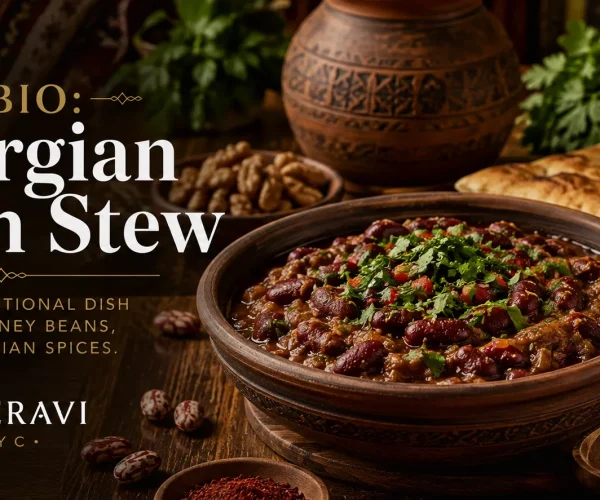
The food served at a harvest supra is rich, rustic, and designed to satisfy the deep hunger of vineyard laborers. Platters of mtsvadi—skewers of pork or beef grilled directly over the hot embers of dried grapevines—are brought to the table, filling the air with a rich, smoky aroma. Freshly baked khachapuri, the iconic cheese-filled bread, is torn apart and shared among guests. Bowls of lobio, the Georgian bean stew, and plates of pkhali (minced vegetable Pâtés seasoned with walnuts and garlic) are passed around.
For dessert, the harvest must is put to immediate use. Winemakers boil down the freshly pressed grape juice, known as badagi, and thicken it with flour to create a sweet paste called pelamushi or tatara. They dip strings of walnuts repeatedly into this warm, sweet mixture and hang them to dry, creating churchkhela, the beloved candle-shaped Georgian sweet synonymous with the harvest season. As the night deepens, the table erupts into song, with the powerful, ancient strains of polyphonic harvest songs echoing through the marani, celebrating the timeless cycle of the vine.
How Can You Experience the Spirit of Rtveli in New York City?
You can experience the authentic flavors and communal warmth of the Georgian harvest season by visiting Saperavi NYC’s welcoming locations across Manhattan.
While the physical vineyards of Kakheti and Imereti are thousands of miles away, the spirit, hospitality, and flavors of Rtveli are alive and well in New York City. At Saperavi NYC, we are dedicated to preserving and sharing Georgia’s ancient culinary and viticultural traditions with New Yorkers and visitors alike. We bring the warmth of the Georgian harvest to our guests every day through our carefully curated menu and wine selection.
To experience your own mini-supra, you can visit any of our three welcoming locations across Manhattan:
- East Village: In the heart of downtown, our East Village location offers a cozy, vibrant atmosphere that mirrors the rustic charm of a traditional Georgian village marani.
- Upper East Side: Our elegant Upper East Side dining room provides a sophisticated setting to explore the nuances of rare qvevri wines paired with classic Georgian dishes.
- Upper West Side: Serving the neighborhood with warmth and hospitality, our Upper West Side location is the perfect spot to gather with family and friends to share a bottle of Saperavi and a spread of traditional breads and dumplings.
At each location, our Georgian restaurant menu features the very dishes that define the harvest supra. Enjoy smoky mtsvadi grilled to perfection, bubbling khachapuri fresh from the oven, and hand-rolled khinkali. To complete the experience, our wine list features an unparalleled selection of natural, low-intervention qvevri wines sourced directly from independent Georgian winemakers who harvest their grapes during Rtveli using the exact methods passed down through generations. We invite you to join us, raise a glass of amber wine, and toast to the ancient, enduring spirit of the Georgian harvest.
Frequently Asked Questions
What does the word “Rtveli” mean?
The word “Rtveli” is derived from ancient Georgian agricultural terms, historically linked to the harvesting of fruit and specifically the grape harvest, symbolizing the culmination of the year’s viticultural labor.
Why are Georgian amber wines orange?
Amber wines, often called orange wines, get their distinct color and tannic structure from skin contact, as white grape juice is fermented and aged together with the grape skins, seeds, and stems inside clay qvevri.
Is Rtveli open to tourists in Georgia?
Yes, Rtveli is a highly welcoming festival, and many family-run vineyards throughout Kakheti and other wine regions invite travelers to participate in picking grapes, crushing them in the satsnakheli, and joining the evening supra.
What is the role of a tamada at a harvest supra?
The tamada, or toastmaster, leads the Georgian feast, introducing structured toasts on themes of gratitude, friendship, and heritage to keep the gathering joyful and harmonious.
Can I try authentic harvest wines at Saperavi NYC?
Absolutely; Saperavi NYC features a curated selection of traditional qvevri wines, including amber and red varieties sourced directly from Georgian winemakers who practice ancestral harvest methods.
What traditional foods are associated with the grape harvest?
Key harvest foods include mtsvadi (grilled skewers), fresh khachapuri, and churchkhela, a traditional sweet made from walnuts dipped in fresh grape must thickened with flour.