A Georgian supra is a traditional, highly structured celebratory feast that serves as the cornerstone of Georgian social life. Centered around abundant shared dishes, continuous natural wine, and a series of philosophical toasts led by a designated toastmaster (tamada), it is a profound celebration of hospitality and community.
What Is the Cultural Significance of a Georgian Supra?
The cultural significance of a Georgian supra lies in its role as a sacred ritual of hospitality, bonding, and oral storytelling that preserves the nation’s identity.
In Georgia, hospitality is not merely a social courtesy; it is a spiritual obligation. The ancient Georgian proverb, “A guest is a gift from God,” is the guiding philosophy behind every supra. This gathering is a living, breathing social institution that has sustained the Georgian people through centuries of foreign invasions, geopolitical shifts, and cultural pressures. When Georgians gather around the table, they are not simply consuming food and drink; they are participating in a profound cultural preservation act.
The supra serves as a forum for philosophical discourse, historical remembrance, and artistic expression through polyphonic singing and poetry. It is a space where generational wisdom is passed down, conflicts are resolved, and community bonds are forged in the fires of shared experience. To truly understand the Georgian soul, one must understand the dynamics of the supra, where the boundaries between host and guest dissolve into a shared celebration of life.
Who Is the Tamada and What Is Their Role?
The tamada is the designated toastmaster of the supra, responsible for leading the feast, introducing philosophical toasts, and maintaining the emotional rhythm of the table.
No supra can begin without the election of a tamada. This individual is chosen by the host or the collective agreement of the guests for their eloquence, wit, emotional intelligence, and legendary alcohol tolerance. The tamada is the captain of the ship, navigating the guests through a journey of collective reflection. A great tamada must possess the rare ability to read the room, sensing when to lift the spirits with a humorous anecdote or when to bring a solemn, contemplative hush to the table with a poignant toast to ancestors or lost loved ones.
The role demands absolute sobriety of mind despite consuming vast quantities of wine; a tamada who becomes visibly intoxicated or loses control of the table is considered a failure. Guests must show utmost respect to the tamada, remaining silent during toasts and asking for permission before proposing their own sub-toasts or leaving the table. Through this structured leadership, the tamada transforms a simple dinner into an elevated theatrical and spiritual experience.
What Are the Traditional Foods Served at a Supra?
A traditional Georgian supra features a continuous flow of shared dishes, including cheese-filled khachapuri, savory khinkali dumplings, walnut-rich pkhali, and grilled mtsvadi.
The culinary landscape of a supra is a feast for the senses, characterized by an abundance that borders on the overwhelming. In Georgian culture, an empty space on the tablecloth is seen as a failure of hospitality, leading to the traditional practice of stacking plates directly on top of one another as the meal progresses.
The feast begins with cold appetizers, featuring vibrant vegetable pâtés known as pkhali, which are made from minced spinach, beets, or cabbage blended with ground walnuts, garlic, and aromatic Georgian spices. Alongside these, guests enjoy badrijani nigvzit—fried eggplant rolls stuffed with a rich, savory walnut paste—and platters of fresh herbs, radishes, and local cheeses like Sulguni.
As the feast intensifies, hot dishes emerge from the kitchen. The legendary khachapuri, a warm, yeast-risen bread oozing with melted cheese, is torn apart and shared by hand. Next come khinkali, massive spiced meat dumplings filled with a rich, steaming broth that must be carefully slurped before consuming the tender dough. Grilled meats, or mtsvadi, skewered and roasted over open grapewood embers, provide a smoky, savory centerpiece to the table. To explore the full depth of these culinary treasures, you can view our complete Georgian restaurant menu hub.
| Dish Name | Description | Key Ingredients |
| Khachapuri | Traditional Georgian cheese-filled bread. | Yeast dough, Sulguni cheese, butter |
| Khinkali | Spiced meat soup dumplings eaten by hand. | Flour dough, minced beef/pork, broth, herbs |
| Pkhali | Minced vegetable pâté served as cold appetizers. | Spinach or beets, ground walnuts, garlic, pomegranate |
| Badrijani Nigvzit | Fried eggplant slices rolled around walnut paste. | Eggplant, walnuts, garlic, blue fenugreek, marigold |
| Mtsvadi | Grilled meat skewers cooked over open embers. | Pork or beef, onions, pomegranate seeds |
How Does the Toasting Ritual Work at a Georgian Feast?
The toasting ritual at a Georgian feast follows a strict sequence of themes—such as peace, homeland, ancestors, and family—introduced by the tamada and expanded upon by the guests.
Toasting at a supra is not a casual “cheers” but a highly structured, poetic ritual. The tamada initiates each round of toasts with a specific theme, beginning almost universally with a toast to peace (mshvidoba), a reflection of Georgia’s turbulent history. Subsequent toasts follow a traditional trajectory: to the occasion of the gathering, to the homeland, to ancestors who have passed, to children and the future, and to the women of the table.
Once the tamada has delivered a toast, they may grant alaverdi to a guest, passing the floor to them to elaborate on the theme with their own personal reflections, poetry, or stories. This creates a collaborative tapestry of shared values and mutual respect. Crucially, one must only toast with wine or traditional Georgian brandy; toasting with beer is strictly forbidden and historically reserved for wishing bad luck upon one’s enemies. Drinking only occurs after the toast is completed, and depending on the solemnity of the toast, guests may be expected to drain their glasses completely, particularly when drinking from a traditional kantsi (a polished ram or goat horn) which cannot be set down on the table until it is empty.
What Role Does Wine Play in the Supra Tradition?
Wine is considered the sacred lifeblood of the Georgian supra, traditionally fermented in clay qvevri vessels and consumed as an essential medium for heartfelt toasts.
To separate wine from the supra is to strip the tradition of its very soul. Georgia is widely recognized as the birthplace of viticulture, boasting over 8,000 years of uninterrupted winemaking history and more than 500 indigenous grape varieties. The traditional Georgian method of winemaking utilizes qvevri—large, egg-shaped clay vessels buried underground where the grape juice, skins, stalks, and pips ferment together naturally. This ancient process yields deeply complex, tannic wines, including the famous skin-contact “amber” or orange wines, and robust reds like Saperavi.
Within the context of the supra, wine is not viewed as an intoxicant to be abused, but as a sacred catalyst for truth, emotional vulnerability, and spiritual connection. The act of drinking wine during a toast is a physical manifestation of agreement and shared humanity. The natural acidity and structure of qvevri wines also serve a practical purpose, cutting through the rich, walnut-heavy, and cheese-laden dishes of the feast, ensuring that guests can sustain their appetite and energy throughout a celebration that often lasts for several hours.
How Can You Experience an Authentic Supra in NYC?
You can experience the magic of an authentic Georgian supra in New York City by gathering friends at Saperavi to share traditional dishes, exceptional qvevri wines, and heartfelt toasts.
While traveling to the Caucasus is a magnificent adventure, New Yorkers do not have to cross the Atlantic to experience the warmth and abundance of a traditional feast. At Saperavi, we have recreated the spirit of the Georgian table in the heart of Manhattan. Whether you visit our cozy Georgian restaurant in the East Village or gather at our other locations, the essence of the supra is woven into every detail of our service.
To experience a true supra, we recommend gathering a group of at least four to six friends and ordering family-style. Let our staff fill your table with overlapping plates of khachapuri, steaming khinkali, and vibrant vegetable pâtés. Appoint a tamada among your group to lead the evening, guiding your companions through heartfelt toasts of gratitude, friendship, and peace. Pair your meal with our curated selection of authentic qvevri wines, and allow the slow, deliberate rhythm of the Georgian feast to transport you to a world where every guest is treated as a divine gift.
What does the word “supra” mean in Georgian?
The word “supra” literally translates to “tablecloth” in Georgian, symbolizing the physical and cultural foundation upon which the entire feast is laid.
Can you toast with beer at a Georgian supra?
No, traditional Georgian etiquette dictates that you must only toast with wine or brandy. Toasting with beer is historically reserved for wishing bad luck upon enemies.
How long does a traditional Georgian supra last?
A traditional Georgian supra is a leisurely affair that can easily last several hours, often extending late into the night with continuous courses, songs, and toasts.
What is the role of the tamada?
The tamada is the designated toastmaster who leads the feast, introduces thematic and philosophical toasts, and manages the emotional atmosphere of the table.
Do you have to drink the entire glass of wine after a toast?
While it is not strictly mandatory for every single toast, certain highly significant toasts or those drunk from a traditional kantsi (horn) are expected to be drained completely.
Can I experience a traditional supra at Saperavi NYC?
Yes, you can recreate the authentic supra experience at Saperavi in NYC by gathering a group, ordering family-style dishes, and appointing a toastmaster to lead your table.

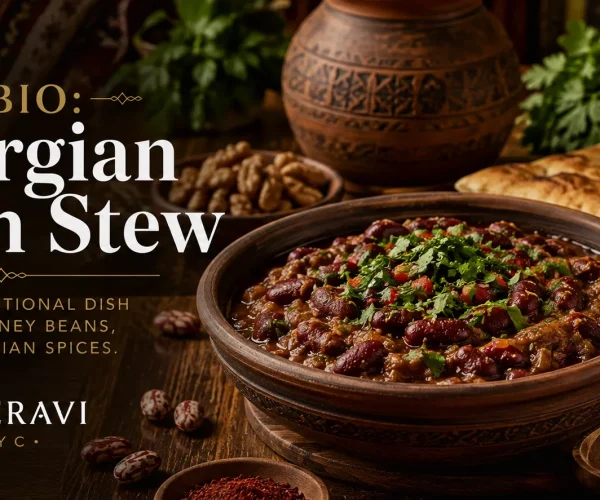
[…] chashushuli, but delivers those complex flavors in a completely plant-based format. During a grand Georgian supra feast, the clay pot of hot beans acts as a grounding, earthy element, offering a rustic contrast to the […]